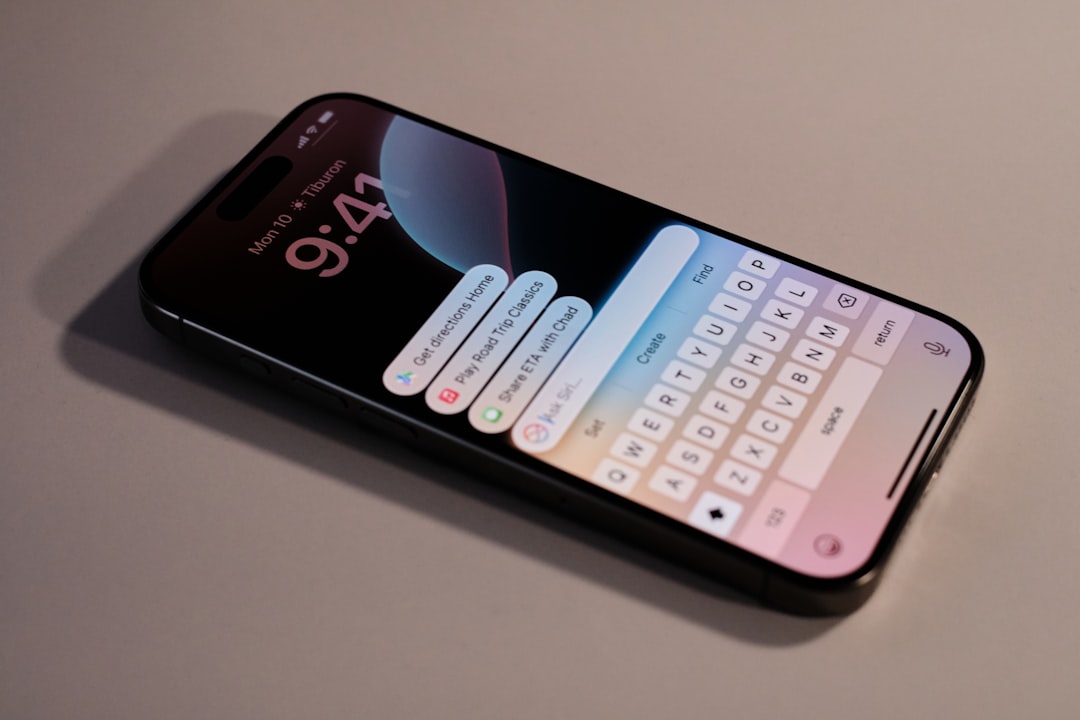
The lead-up to WWDC 2026 suggests a seismic shift in Apple’s software philosophy. While previous iterations of iOS focused on "Apple Intelligence" as a localized feature set, iOS 27 is rumored to break down the silos between the operating system and third-party applications. As noted in early previews from PCMag, the expectation for this year’s keynote is a total pivot toward "Agentic" workflows.
This is not merely a refinement of voice commands. iOS 27 represents the transition of Siri from a retrieval-based assistant to a reasoning engine. By opening the core of Siri to third-party AI agents, Apple is positioning the iPhone as the primary orchestrator of a user’s digital life, moving beyond the "app-first" paradigm that has dominated since 2008.
The Dawn of the Agentic Era: Siri’s Multi-Step Orchestration in iOS 27
The most significant change in iOS 27 is the transition from "Assistant" to "Agent." Historically, Siri operated on a linear command-response model. If you asked for a reservation, it opened an app. In the iOS 27 era, Siri acts as a reasoning engine capable of executing complex, multi-step workflows across disparate services without requiring the user to bounce between icons.
This shift is facilitated by a new chatbot-style interface. Instead of the colorful glow at the bottom of the screen that disappears after a single query, Siri now occupies a persistent, conversational overlay. This allows for ongoing dialogue and task refinement. If an initial request is too broad, the agent asks clarifying questions, maintaining the "state" of the conversation across several minutes of interaction.
The power of this system lies in multi-app task orchestration. Consider a request like: "Plan a dinner: find a table for four, invite my 'Friday Night' contact group, and add the menu to my grocery list." iOS 27 doesn't just launch OpenTable; it reasons through the sequence—checking availability, interfacing with Messages, and writing to Reminders or a third-party grocery app—all within the Siri interface. Furthermore, the system leverages "Proactive Intelligence," using on-device signals to suggest these agentic actions before a user even speaks, such as noticing a flight confirmation and suggesting an Uber reservation based on historical patterns.
The Siri Skills SDK: Empowering Third-Party AI Integration
For developers, the "Agentic" shift requires moving beyond the limitations of App Intents. At WWDC 2026, Apple is expected to debut the Siri Skills SDK. This framework allows developers to move away from rigid "shortcuts" and toward modular agents that Siri can call upon as needed.
The technical architecture of the Siri Skills SDK maps granular app functions to Siri’s global reasoning model. Instead of defining every possible user path, developers expose "capabilities"—such as data retrieval, media editing, or transaction processing—and let Siri’s LLM (Large Language Model) determine when and how to invoke them.
// Hypothetical Siri Skills SDK implementation for a Travel Agent
import SiriSkills

struct HotelBookingSkill: SiriSkill {
    var capabilityIdentifier = "com.travelapp.bookHotel"

    // Defines what the agent can do for Siri's reasoning engine
    func actions() -> [AgentAction] {
        return [
            .init(intent: .search, parameters: [.location, .date, .budget]),
            .init(intent: .reserve, parameters: [.hotelID, .roomType])
        ]
    }

    func execute(action: AgentAction) async throws -> SkillResponse {
        // Core logic for processing the request within the app's secure sandbox
    }
}
This framework standardizes how diverse categories—Travel, Finance, Productivity—communicate with the OS. By deep-linking directly into execution layers, a developer can allow Siri to process a refund in a shopping app or edit a specific layer in a photo app without the user ever seeing the app’s splash screen.
Liquid Glass 2.0: Designing for a Context-Aware UI
To support this agentic behavior, iOS 27 introduces Liquid Glass 2.0. This evolution of Apple’s design language focuses on a context-aware UI that reacts to background AI processes. The aesthetic is defined by translucent, morphing elements that signify when an agent is "thinking" or "working" on a multi-step task.
In Liquid Glass 2.0, interface components are adaptive. If Siri is orchestrating a travel itinerary, the UI might morph to prioritize a map and a booking confirmation, dimming unrelated controls. This creates a focused environment where the interface is generated dynamically based on the current step of the agent’s workflow.
Spatial feedback plays a crucial role here. Using subtle depth effects and synchronized haptics, the UI signals the difference between a third-party agent gathering data (a "soft" state) and the finalization of a transaction (a "firm" state). This visual and tactile clarity is essential for accessibility; the context-aware UI simplifies navigation for users with cognitive or motor impairments by reducing the number of taps required to complete complex sequences.
Privacy, Security, and the Apple Intelligence Ecosystem
The move to third-party agents introduces significant privacy challenges. Apple’s solution in iOS 27 is an evolution of Private Cloud Compute (PCC). While much of the reasoning happens via on-device agentic processing to maintain local data privacy, the PCC handles the increased data throughput required when multiple third-party agents need to coordinate.
To protect users, Apple is introducing a "Granular Agent Access" layer. Similar to how users grant access to Photos or Location, they must now vet which parts of their data a third-party "Skill" can touch. An agent from a budget app might have "Read Access" to transaction notifications but "No Access" to the Contacts list, preventing data harvesting.
The strategic impact of this move cannot be overstated. By opening Siri to developers through a structured SDK, Apple cements the iPhone as the primary hardware hub for the personalized AI economy. Rather than users going to a specific AI website or app, the OS becomes the intelligent fabric that connects all services.
As we look toward the WWDC 2026 keynote, it is clear that iOS 27 is not just another update; it is a declaration that the future of mobile interaction is agentic, integrated, and orchestrated by a more powerful, open Siri. For developers, the message is clear: stop building apps as destinations and start building them as skills for a larger intelligence.