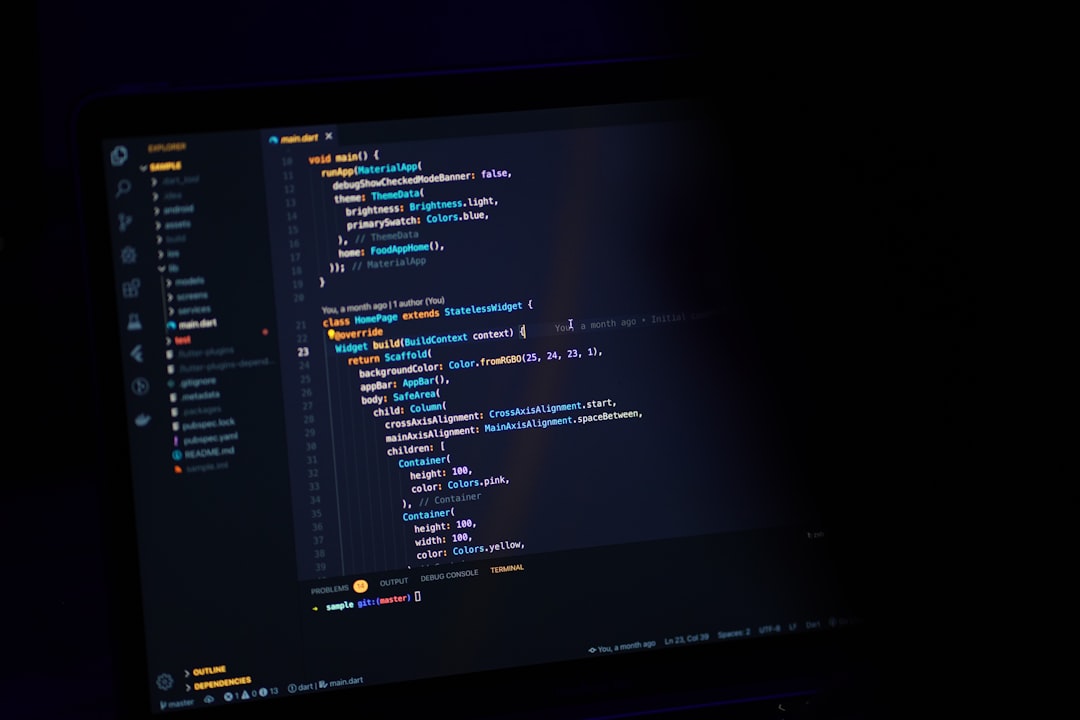
Flutter 3.44: Decoupling UI Libraries and the Impeller Performance Milestone
Introduction: Flutter 3.44 - A Landmark Release
Flutter 3.44 emerges as a pivotal release, signifying a substantial leap forward for the framework. This update isn't merely incremental; it represents a foundational shift, fundamentally altering how developers might approach application architecture and user experience. The release introduces two core pillars that collectively "rewire how you'll build apps," as articulated by the Flutter team: a significant architectural re-evaluation of UI libraries and a major performance milestone with the Impeller rendering engine reaching full Android rollout.
These advancements underscore Flutter's continued commitment to flexibility, performance, and developer experience. By addressing long-standing architectural considerations and performance bottlenecks, Flutter 3.44 sets a new standard for cross-platform development, promising more agile development cycles and inherently smoother applications right out of the box. This deep dive will explore the nuances and implications of these transformative changes.
Decoupling UI Libraries: The Architectural Shift
From Monolith to Modular: Prior to Flutter 3.44, the framework operated with a more monolithic structure where core UI components, specifically the Material Design and Cupertino (iOS-style) widget sets, were tightly integrated within the main Flutter SDK. This meant that any updates or iterations to these foundational UI libraries necessitated a full Flutter SDK update. This monolithic approach, while simplifying initial setup, presented certain constraints regarding flexibility and independent evolution.
Flutter 3.44 introduces a significant architectural shift: Material and Cupertino widgets are now decoupled and exist as standalone packages. Developers will now interact with them via package:material and package:cupertino, rather than them being implicitly bundled within the core framework. This modularization represents a mature evolution of Flutter's architecture, moving towards a more granular and extensible system.
Benefits for Developers and the Framework:
The advantages of this decoupling are multifaceted and impactful. Foremost, it grants developers the ability to update their UI components independently of the core Flutter SDK. Imagine a scenario where a new Material Design specification is released; developers can now adopt these changes by updating just the material package, rather than waiting for and installing an entirely new SDK version. This independent update cycle fosters greater agility in development.
Furthermore, this modularity enhances flexibility and control. Developers gain increased freedom to customize existing UI frameworks, fork them for highly specific needs, or even replace them entirely with alternative UI paradigms more easily. From the framework's perspective, this leads to a potentially smaller core Flutter SDK, as it no longer needs to bundle all UI libraries. Critically, it allows the Flutter team to iterate on Material and Cupertino components more rapidly, unburdened by the slower release cycle of the main SDK, accelerating innovation within the UI layer.
Implications for Your Projects: For existing projects, the impact of this architectural change is designed to be minimal. The Flutter tooling typically handles the necessary dependency management automatically, ensuring a smooth transition without extensive manual configuration. However, understanding this shift is crucial for future-proofing projects and leveraging the newfound agility in UI design and maintenance. This enables a more stable core SDK, as breaking changes in UI components no longer directly force a full SDK upgrade, contributing to greater overall project stability and allowing developers to adopt new UI features at their own pace.
Impeller's Full Rollout: Eliminating Jank, Delivering Smoothness
The Impeller Vision: Impeller has been Flutter's ambitious next-generation rendering engine, conceived with a singular vision: to deliver consistently smooth and predictable performance across all target platforms. Its development has focused on addressing fundamental rendering challenges that can lead to performance inconsistencies, particularly shader compilation jank. The ultimate goal has always been to achieve a truly native-grade user experience that is visually fluid and highly responsive.
The Milestone: With Flutter 3.44, Impeller reaches a significant milestone: it is now enabled by default for all Android devices. This completes a comprehensive rollout strategy that previously saw Impeller activated on iOS and a subset of Android devices. This universal activation signifies that the engine has matured to a point where it can reliably deliver its performance benefits across the diverse Android ecosystem, ensuring a consistent high-quality experience regardless of the device.
Solving Shader Compilation Jank: One of the most persistent challenges in graphics rendering, particularly for cross-platform frameworks, has been